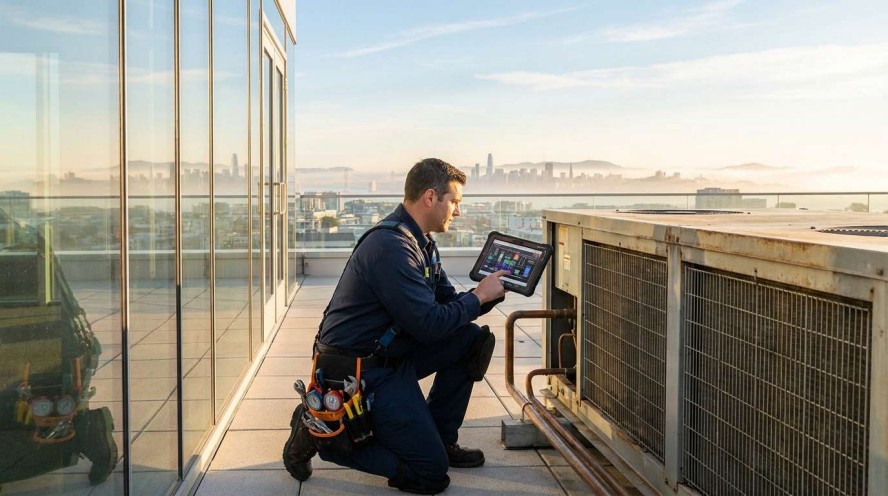
Navigating the complexities of commercial HVAC maintenance pricing in 2026 requires a sharp eye for detail and a clear understanding of industry benchmarks. Whether you are managing a sprawling warehouse or a high-tech laboratory, you must balance costs that typically range from $0.10 to $0.50 per square foot depending on the intensity of the environment. Securing a reliable budget means looking past the surface numbers to account for equipment complexity and the critical uptime requirements that keep your business operational.
For San Francisco and Bay Area businesses, finding a single point of contact for these facility needs ensures both accountability and long-term system health. Relying on a partner with over 30 years of experience and top-tier credentials, such as being Diamond Certified, provides the peace of mind that maintenance is being handled with professional precision. Investing in a structured preventive plan does not just protect the hardware, it safeguards the bottom line against the unpredictable costs of emergency repairs and system failures.
Key Takeaways
- Annual commercial HVAC maintenance typically costs between $0.10 and $0.50 per square foot, with prices scaling based on the facility’s operational intensity and uptime requirements.
- Consolidating HVAC maintenance and janitorial services under a single point of contact reduces administrative overhead and ensures higher accountability for long-term system health.
- Implementing a structured preventive maintenance plan can reduce monthly energy consumption by up to 40% and eliminates the volatile costs associated with emergency repairs.
- Large-scale systems like chillers and rooftop units require specialized budgeting based on cooling capacity, generally ranging from $100 to $400 per ton annually.
1. Cappstone Facility Services For Integrated Maintenance
Cappstone Facility Services stands out for San Francisco and Bay Area businesses by streamlining commercial HVAC maintenance pricing through an integrated facility management model. Instead of juggling multiple contracts, you benefit from a single point of contact that oversees both complex mechanical systems and essential janitorial services. This consolidated approach eliminates the administrative overhead often associated with managing disparate vendors, which can lead to significant cost savings over time. By aligning your HVAC preventive maintenance with broader facility goals, we ensure that your budget is utilized efficiently across all service lines.
With over 30 years of industry experience, our team brings a level of reliability and accountability that is essential for managing one of your largest facility line items. Our Diamond Certified status and A+ BBB rating provide peace of mind that your mechanical investments are being handled by qualified professionals who prioritize long term system health. Whether your building falls into the standard office category or requires high intensity climate control, our team applies data backed benchmarks to create a structured plan. This expertise helps prevent the expensive emergency repairs that often derail annual budgets, keeping your operational costs predictable and manageable.
Choosing a comprehensive partner allows you to focus on your core business while experts monitor the technical nuances of chiller tons and rooftop units. Our local presence in the San Francisco and Bay Area means we understand the specific environmental factors and regulatory requirements that impact HVAC performance in the region. You receive a customized maintenance schedule that reflects the actual usage intensity of your facility, ensuring you are not overpaying for unnecessary visits or underfunding critical upkeep. This strategic oversight transforms HVAC maintenance from a fluctuating expense into a stable, value driven component of your overall facility strategy.
2. Square Footage Benchmarks For Annual Budgeting
When you are building a facility budget for 2026, using a square footage benchmark is one of the most reliable ways to forecast your mechanical expenses. Most commercial properties in the Bay Area find that annual preventive maintenance costs fall between $0.10 and $0.50 per square foot. This wide range exists because a standard warehouse with simple ventilation requirements operates very differently than a high intensity data center or medical lab. By identifying where your specific facility sits on this spectrum, you can avoid the common pitfall of underfunding critical infrastructure care. Strategic budgeting at this stage ensures that your HVAC system remains an asset rather than becoming a source of emergency financial strain.
The complexity of your equipment and your specific uptime requirements will ultimately dictate your exact position within these pricing benchmarks. Low use spaces like traditional offices or retail storefronts typically trend toward the lower end of the scale, often landing between $0.10 and $0.20 per square foot. Conversely, facilities that require precise climate controls or heavy industrial usage should prepare for the higher $0.40 to $0.50 range to account for more frequent filter changes and sensor calibrations. Partnering with an experienced provider like Cappstone allows you to streamline these costs by integrating mechanical oversight with your broader facility management plan. This comprehensive approach provides a single point of contact for your San Francisco business, ensuring accountability across all your maintenance needs.
Reliability is the most important factor when managing large scale mechanical budgets, and having a partner with over 30 years of experience makes a significant difference. Choosing a Diamond Certified and BBB accredited team ensures that your square footage estimates translate into high quality, verifiable service on the ground. When you consolidate your HVAC maintenance with other facility services, you gain better visibility into your total cost of occupancy while benefiting from expert technicians who understand the unique climate demands of the Bay Area. This proactive strategy not only protects your equipment but also optimizes your annual spend by catching minor issues before they escalate into expensive failures. Using these established benchmarks helps you maintain a professional, well managed environment that supports your long term business goals.
3. Tonnage Based Pricing For Large Scale Systems
For facility managers overseeing expansive properties, calculating maintenance costs by tonnage is often the most accurate way to protect one of your largest capital investments. Large scale systems like chillers and heavy duty rooftop units require specialized care that typically ranges between $100 and $400 per ton annually. This pricing model allows you to align your budget with the actual cooling capacity of your building, ensuring that complex mechanical components receive the calibration they need. By investing in this structured preventive approach, you can significantly reduce the risk of catastrophic equipment failure during peak usage months. This data backed benchmark serves as a vital tool for decision makers who need to justify maintenance spend while professionalizing their facility operations.
Partnering with an experienced facility management provider like Cappstone allows you to streamline these high cost mechanical requirements alongside your traditional janitorial services. With over 30 years of experience in the San Francisco and Bay Area, we provide a single point of accountability for your entire building envelope. Our Diamond Certified status and BBB accreditation offer the peace of mind that your large scale HVAC systems are being managed by verified professionals. Instead of juggling multiple vendors for different mechanical needs, you gain a cohesive strategy that maximizes equipment lifespan and energy efficiency. This integrated approach ensures that your complex cooling infrastructure remains reliable and cost effective year after year.
4. Diagnostic Rates And Emergency Service Call Fees
When you are managing a large facility budget in the Bay Area, unexpected equipment failures can quickly derail your financial planning. One-time diagnostic calls for commercial systems generally range from $150 to $500, with prices fluctuating based on the complexity of your rooftop units or chillers and the travel time required for the technician. These fees cover the initial assessment and specialized labor needed to identify a malfunction before any actual repairs begin. For decision makers, these costs highlight the financial volatility of relying solely on reactive repairs rather than a structured maintenance plan. High-intensity environments like data centers or medical labs often see these rates trend toward the higher end due to the specialized nature of their climate control systems.
Partnering with a comprehensive facility management expert like Cappstone allows you to streamline these expenses through a single point of contact for all mechanical and janitorial needs. With over 30 years of experience serving San Francisco businesses, we provide a level of accountability that helps prevent the frequent need for expensive emergency service calls. Our Diamond Certified and BBB-accredited status ensures that you are receiving professional oversight that prioritizes system uptime and budget predictability. By integrating HVAC monitoring with traditional facility services, you can reduce the frequency of diagnostic fees while ensuring your building remains comfortable and compliant. This holistic approach transforms a major line item into a manageable, data-backed component of your annual operations.
5. Long Term Preventive Maintenance Contract Savings
When you look at your facility budget for 2026, one-time service calls can quickly become a significant financial burden, often exceeding $1,000 per visit for emergency repairs or basic troubleshooting. Transitioning to a structured preventive maintenance contract allows you to move away from these unpredictable spikes and toward a predictable, data-backed annual expenditure. By locking in professional oversight, your business can capitalize on lower per-visit rates while ensuring that critical components like compressors and heat exchangers operate at peak efficiency. This proactive approach significantly reduces the total cost of ownership by preventing the premature failure of expensive rooftop units and chillers.
Partnering with a comprehensive facility management expert like Cappstone provides San Francisco and Bay Area businesses with a single point of contact for both mechanical systems and janitorial services. This integrated model streamlines communication and accountability, ensuring that your HVAC system is monitored by a team with over 30 years of experience and top-tier industry certifications. Having one reliable partner means you are not juggling multiple vendors, which often leads to overlooked maintenance tasks and increased administrative costs. Choosing a Diamond Certified provider ensures that your equipment receives the highest standard of care, protecting your investment and maintaining building comfort year-round.
The long-term savings of a maintenance plan extend far beyond reduced service fees, as regular tuning can lower monthly energy consumption by up to 40 percent in high-intensity facilities. These contracts are particularly valuable for complex environments like labs or data centers where uptime is non-negotiable and system failure carries a heavy price tag. By adhering to standard benchmarks such as tonnage-based pricing or square footage estimates, you can build a sustainable budget that prioritizes equipment longevity. Ultimately, investing in a structured plan transforms HVAC maintenance from a reactive expense into a strategic asset that supports your bottom line and operational stability.
Mastering Your Facility’s HVAC Budgeting Strategy
Choosing an experienced partner like Cappstone for your mechanical needs allows you to transform one of your facility’s largest line items into a predictable and manageable expense. By utilizing data-backed benchmarks and structured preventive maintenance plans, businesses in San Francisco and the Bay Area can avoid the sticker shock often associated with emergency repairs. Whether your facility falls into the standard office range of $0.10 per square foot or requires the high-intensity oversight of a data center, having a single point of contact ensures accountability across the board. This professional approach to budgeting helps decision-makers maintain critical uptime while keeping annual costs within the standard industry range of $100 to $400 per chiller ton.
With over 30 years of experience and prestigious Diamond Certified status, Cappstone provides the reliability and trust necessary to manage complex HVAC systems alongside traditional janitorial services. Our expert team understands that facility performance is directly tied to the consistency of maintenance schedules and the quality of technical oversight. By consolidating your mechanical and cleaning needs under one roof, you eliminate the communication gaps that often lead to missed inspections or equipment failure. This holistic management style not only protects your capital investment but also ensures that your building remains a comfortable and productive environment for all occupants.
Navigating the complexities of commercial HVAC maintenance pricing is much simpler when you have a partner that prioritizes transparency and long-term value. Instead of juggling multiple vendors and unpredictable invoices, you can rely on a proven system that scales with your specific building type and usage intensity. If you are ready to streamline your operations and ensure your mechanical systems are handled by certified professionals, it is time to see why you should hire professional building services. Taking this step will provide you with the peace of mind that your facilities we service are being managed by a team committed to superior performance and cost-effective solutions.
Frequently Asked Questions
1. What is the typical cost per square foot for commercial HVAC maintenance?
You can generally expect to pay between $0.10 and $0.50 per square foot for professional maintenance services. This range varies depending on the intensity of your environment, such as whether you are managing a standard warehouse or a high-tech laboratory.
2. Why should I choose an integrated facility management model for my HVAC needs?
Consolidating your HVAC and janitorial services under one point of contact eliminates administrative overhead and ensures total accountability. This streamlined approach allows you to align your mechanical maintenance with broader facility goals for maximum efficiency.
3. How does professional maintenance protect my company’s bottom line?
Investing in a structured preventive plan safeguards your business against the unpredictable and high costs of emergency repairs. By ensuring system uptime and equipment health, you prevent expensive failures that can disrupt your daily operations.
4. What makes a Diamond Certified provider different for Bay Area businesses?
Choosing a Diamond Certified partner with over 30 years of experience gives you the peace of mind that your facility is in expert hands. This elite status, combined with an A+ BBB rating, demonstrates a proven track record of reliability and professional precision in the San Francisco area.
5. What factors influence the complexity of HVAC maintenance pricing?
Your specific pricing is influenced by equipment complexity and the critical uptime requirements of your industry. High-intensity environments that require constant climate control will naturally require more detailed oversight to remain operational.
6. How can I reduce the administrative burden of managing multiple facility vendors?
You can significantly simplify your operations by partnering with a single provider that handles both mechanical systems and essential facility needs. This single point of contact model ensures that maintenance is handled seamlessly without you having to juggle disparate contracts. This proactive approach is a key part of a summer cleaning checklist that keeps your building running smoothly during the hottest months.